Packing Up and Moving Out: What Actually Happens When a Forum Leaves Its Platform Behind
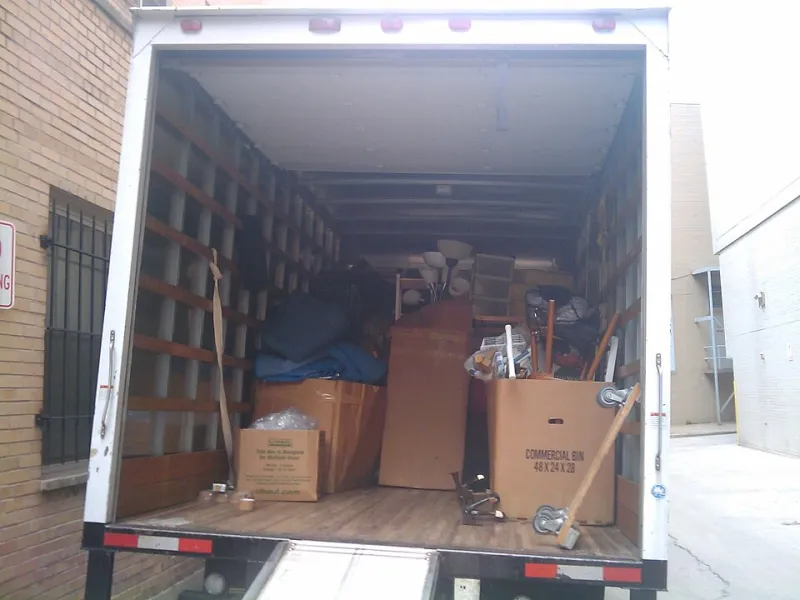
Photo: brownpau, CC BY 2.0, via Wikimedia Commons
There's a moment every forum admin eventually hits. Maybe it's the third policy change in a year. Maybe it's a sudden rule that wipes out half the community's archived threads. Maybe it's just the slow, creeping realization that the platform you've built your community on doesn't actually belong to you — and never did.
For a growing number of online communities across the US, that moment is becoming a turning point. Rather than accepting the terms, they're migrating: picking up their members, their content, and their culture, and replanting somewhere they actually control. But moving a living, breathing community is nothing like moving a website. It's messier, slower, and way more emotional than most people expect.
Here's what those migrations actually look like — from the technical chaos to the unexpected human drama.
The Spark That Starts It All
Most migrations don't happen because someone woke up one morning and decided to go indie. They happen because something breaks trust.
Take the case of a mid-size hobbyist community built around vintage electronics restoration. After nearly a decade on a major social platform, the group's admin — who goes by the handle Resistor_Rex in his new forum space — watched the platform quietly deprecate the group's file-sharing features. Years of repair guides, wiring diagrams, and member-uploaded manuals just... stopped being accessible to new users.
"We had basically built a library," he told us. "And then one day the library locked its doors to anyone who hadn't been there before. That was it for me."
Similar stories pop up across niches — true crime discussion boards losing monetization access overnight, parenting groups hit with sudden content moderation sweeps, local neighborhood forums watching their membership data get absorbed into ad-targeting systems. The trigger varies. The feeling doesn't: this platform is not on our side.
The Technical Reality Nobody Talks About
Once the decision is made, the first thing admins usually discover is that data migration is hard. Not impossible, but genuinely hard — especially when the original platform wasn't designed to let you leave gracefully.
Some platforms offer export tools. Many don't. And even when they do, what you get is often a messy archive file that doesn't map cleanly onto whatever new software you're trying to run. Thread hierarchies break. User accounts orphan. Images stored externally just become dead links.
One admin who migrated a regional sports fan forum to a self-hosted setup described spending three weekends manually re-linking photos that had been hosted on the old platform's CDN. "I saved maybe 60% of the visual content," she said. "The rest is just gone. Some threads look like ghost towns now."
The communities that navigated this best were the ones that started archiving before they announced the move. Quietly, methodically, they backed up content while still operating normally on the old platform. By the time they went public with the migration, the new home was already populated enough to feel real.
The Money Conversation
Self-hosting isn't free. That's obvious in theory, but it hits differently in practice.
Shared hosting for a small forum might run $10–$30 a month. But a community with thousands of active members and years of media uploads? You're looking at VPS or dedicated server territory, which can climb into the hundreds per month depending on traffic. Add domain registration, SSL certificates, backup solutions, and the occasional developer hour when something breaks, and you've got a real budget on your hands.
Communities that survived this transition financially almost always had one of two things: a pre-existing donation culture or a moderator team willing to split costs personally in the short term. The ones that struggled were those that assumed the community would automatically fund itself once members understood the stakes. Sometimes they do. Often they don't — at least not fast enough.
A tiered supporter model tends to work better than a straight donation ask. Give members something tangible — a badge, early access to new features, a special subforum — and the conversion rate improves noticeably.
The Culture Shock Nobody Warns You About
Here's the part that surprises almost every admin who goes through a migration: moving platforms changes the community's personality, whether you want it to or not.
Part of it is attrition. Not everyone follows. Some members are too casual to bother making a new account. Others are lurkers who never really engaged anyway. A few are just loyal to the old platform and won't leave on principle. What you're left with is a smaller, more intentional group — and that's not necessarily a bad thing.
"We lost about 40% of our registered users," said the admin of a tabletop gaming forum that migrated in 2023. "But the people who came over were the ones who actually cared. Post quality went up. Drama went down. Honestly, the community got better."
Other groups found the opposite. The members who didn't migrate were the moderating force — the long-timers who kept conversations civil and on-topic. Without them, the new forum felt chaotic, and the admin had to rebuild community norms almost from scratch.
What Makes the Difference
After looking at a range of migration stories, a few patterns emerge pretty clearly.
Communication is everything. Communities that gave members months of notice, explained the reasoning transparently, and created a clear step-by-step onboarding guide retained far more users than those that announced the move and expected people to figure it out.
Overlap periods matter. Keeping the old space accessible — even in a read-only state — while the new one ramps up gives members time to adjust without feeling abandoned. A hard cutover is almost always a mistake.
Celebrate the move. The communities that threw a virtual "grand opening" on the new platform — pinned welcome threads, migration milestone posts, a little ceremony around the occasion — built momentum faster than those that just quietly flipped the switch.
Migration isn't for every community. It takes real resources, real patience, and real commitment from the people running it. But for the groups that have done it successfully, the payoff is something that's genuinely hard to put a price on: a home that's actually yours.